
Probiotics, the Canine Microbiome, and Puppy Development: Why Gut Health Matters in Breeding Programs and Family Dogs

Introduction
For many years, canine digestive health was viewed mainly through the lens of food tolerance, parasites, infections, or temporary stomach upset. If a puppy developed diarrhea, the most common questions were: Is it Giardia? Is it coccidia? Is it a virus? Did the food change too quickly?
Those questions still matter. Responsible breeders and puppy owners should always take digestive symptoms seriously and work with a veterinarian when illness is suspected. However, modern veterinary research is adding another important layer to the conversation: the canine gut microbiome.
The gut microbiome is the community of bacteria, fungi, viruses, and other microorganisms living primarily in the digestive tract. These organisms are not simply “along for the ride.” They help support digestion, immune function, nutrient absorption, intestinal barrier health, and overall balance within the body.
This is why probiotics have become such an important topic in modern canine wellness. Probiotics are beneficial live microorganisms that, when used appropriately, may help support a healthier and more resilient gut environment.
For breeding programs, probiotics are especially interesting because gut health does not begin when a puppy goes home. It begins with the mother, continues through pregnancy and nursing, and becomes especially important during weaning.
At Vom Geliebten Haus, our goal is to continue learning and improving every part of our program. We believe strong puppies are built through genetics, structure, temperament, nutrition, veterinary care, and daily husbandry — but also through the invisible foundation of digestive and immune health.

What Is the Canine Microbiome?
The canine microbiome refers to the living microbial ecosystem found in and on the dog’s body. The gut microbiome is especially important because the digestive tract is deeply connected to immune function, metabolism, nutrient absorption, and intestinal barrier health.
A healthy gut microbiome is usually diverse and balanced. Diversity matters because different beneficial microorganisms perform different functions. Some help break down nutrients. Some produce short-chain fatty acids, which nourish intestinal cells. Others help maintain the gut barrier or compete with undesirable organisms.
When this ecosystem becomes unbalanced, the condition is often called dysbiosis. Dysbiosis may occur after stress, illness, diet changes, antibiotics, parasites, or other disruptions. In dogs, intestinal dysbiosis has been associated with acute and chronic gastrointestinal problems, and research continues to explore its connection to skin health, immune function, metabolism, and overall wellness.
For breeders and puppy owners, the most important takeaway is simple: the gut is not just a digestion organ. It is a major wellness system.

Puppies Are Not Born With a Mature Gut
Newborn puppies enter the world with immature digestive and immune systems. Their microbiome develops rapidly during the neonatal period and continues to change as they grow.
Early microbial exposure may come from several sources:
Contact with the mother during birth
The dam’s skin and mammary area
Colostrum and milk
The whelping environment
Littermates
Early food introduction
Human handling and husbandry
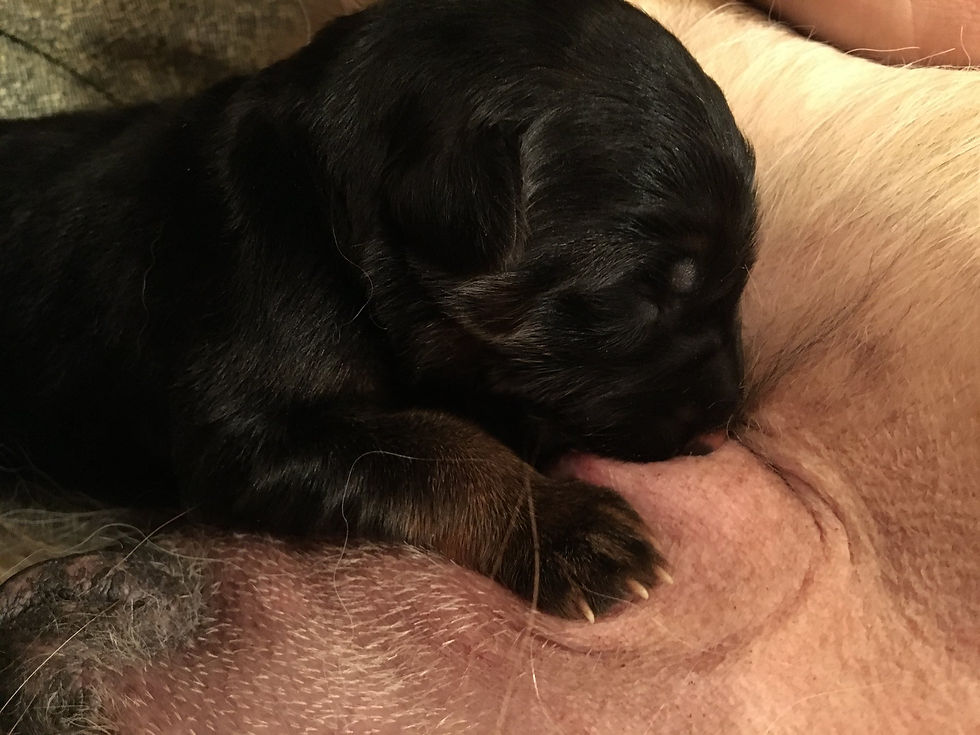
The mother plays a major role in this process. Puppies inherit genes from their parents, but they also acquire early microbial exposure from their dam and environment. This is one reason maternal digestive health matters so much in breeding programs.
Colostrum is often discussed because it provides maternal antibodies, but it also contributes to gut development. Nursing, maternal care, and early environmental exposure all help shape the puppy’s early digestive ecosystem.
Natural Birth, C-Sections, and Early Microbial Seeding
Research in multiple species suggests that the method of birth can influence early microbial exposure. Puppies born vaginally are exposed to maternal vaginal and fecal microorganisms during delivery. Puppies born by C-section may have a different early microbial pattern because they do not experience the same contact during birth.
This does not mean C-sections are bad. In responsible breeding, C-sections can be necessary and lifesaving. However, it does remind us that microbial exposure is part of early development and that puppies born by C-section may benefit from thoughtful digestive and immune support under veterinary guidance.
The goal is not to avoid necessary veterinary care. The goal is to understand that every intervention, even a lifesaving one, may influence the developing microbiome — and that breeders can plan proactively.

Why Weaning Is a High-Risk Digestive Window
Weaning is one of the most important digestive transitions in a puppy’s life.
During weaning, puppies move from milk to solid food. This shift changes the nutrients available in the gut, which also changes the microbial population. At the same time, the puppy’s immune system is still developing, maternal antibody protection is changing, and the digestive tract is learning to process new foods.
This is why loose stool during weaning is so common in breeding environments. It does not always mean something catastrophic is happening, but it does mean the gut is under stress and should be supported carefully.
When puppies develop diarrhea, responsible breeders should still consider common causes such as parasites, viruses, bacterial overgrowth, sanitation issues, and food changes. However, it is also important to understand that diarrhea often reflects an ecosystem disruption. Supporting the microbiome may help the gut return to balance more efficiently.

Antibiotics: Important Tools, But Not Without Consequences

Antibiotics can be necessary and lifesaving when bacterial infection is present. They should never be dismissed when a veterinarian determines they are needed.
However, antibiotics do not only affect harmful bacteria. They can also reduce beneficial bacteria and alter the gut microbiome. Studies in dogs have shown that metronidazole, one commonly used antibiotic for gastrointestinal signs, can significantly affect fecal microbiome and metabolome patterns, with effects lasting for weeks in some dogs.
This is one reason veterinary medicine is increasingly emphasizing antibiotic stewardship. Antibiotics should be used thoughtfully, when appropriate, and under veterinary guidance.
For breeders, this matters because antibiotic exposure in a dam, puppy, or young dog may influence digestive balance. When antibiotics are needed, probiotic or microbiome-supportive strategies may be worth discussing with a veterinarian.
This is not about being “anti-antibiotic.” It is about being pro-balance, pro-recovery, and pro-long-term health.
What Are Probiotics?
Probiotics are live beneficial microorganisms that may support a healthy balance of bacteria in the digestive tract.
They are commonly used to support:
Normal stool quality
Digestive balance during stress
Microbiome recovery after disruption
Puppy transitions during weaning
Gut resilience during diet changes
General immune and digestive wellness
Probiotics are not all the same. Different organisms and strains may have different effects. This is why quality, strain selection, storage, and proper use matter.
A probiotic should not be chosen only because it has a large number of colony-forming units, also called CFUs. More is not always better. The right organism, the right strain, the right dose, and the right use matter more than simply choosing the biggest number on a label.
Prebiotics, Probiotics, and Synbiotics
It is also helpful to understand the difference between probiotics and prebiotics.
Probiotics are beneficial live microorganisms.
Prebiotics are fibers or compounds that help feed beneficial bacteria already living in the gut. Examples often discussed in animal nutrition include FOS, fructooligosaccharides, and MOS, mannanoligosaccharides.
Synbiotics combine probiotics and prebiotics.
For dogs and puppies, synbiotic support may be useful because it provides both beneficial organisms and nourishment for the gut ecosystem.

Probiotics in Pregnancy and Lactation

One of the most exciting areas of research for breeders is maternal supplementation. Studies in pregnant dogs have explored whether adding prebiotics and probiotics during late pregnancy may support colostrum quality and reduce gastrointestinal issues in puppies.
This matters because the mother is the first source of microbial and immune support for her puppies. A healthy dam helps build healthier puppies not only through genetics, but also through nutrition, colostrum, nursing, and microbial exposure.
For breeding programs, this supports a proactive approach. Gut health should not begin only after puppies have loose stools. It should be considered before breeding, during pregnancy, through lactation, and during weaning.
Probiotics for Puppies
Puppies may benefit from probiotic support during times of transition, especially when their digestive systems are still maturing.
Common times breeders and owners may consider probiotics include:
During weaning
When puppies begin new foods
During travel or pickup
When puppies go to new homes
After veterinary-directed antibiotic use
During mild stress-related digestive changes
During boarding or environmental changes
Puppy owners should introduce any supplement according to label directions and breeder or veterinary guidance. Young puppies are delicate, and more is not better. Consistency and proper dosing matter.
Probiotics for Adult Dogs
Adult dogs may also benefit from digestive support.
Stress, travel, diet changes, medication, competition, boarding, aging, and illness can all influence gut balance. For active family dogs, breeding dogs, and dogs in performance or show environments, probiotics may be part of a broader wellness routine.
A good probiotic program should work alongside:
High-quality nutrition
Clean water
Appropriate veterinary care
Parasite prevention
Safe food transitions
Sanitation
Stress reduction
Responsible antibiotic use
Probiotics are not a replacement for veterinary care. They are one tool within a complete health program.
Choosing a Probiotic Product
When choosing a probiotic for dogs, consider the following:
Is it formulated for dogs?
Are the strains clearly identified?
Does the company provide evidence or quality control?
Is the product stable and properly stored?
Is the dose appropriate for the dog’s age and size?
Does it include prebiotic support?
Is it easy to use consistently?
Storage is especially important. Some probiotics require refrigeration. Others are shelf-stable. Heat, moisture, expired product, or mixing into very hot food may reduce effectiveness.
A probiotic can only work well if the organisms remain viable and the product is used correctly.
How We Incorporate Probiotics in Our Program
At Vom Geliebten Haus, we believe in supporting our dogs from the inside out. We use probiotics as part of a complete wellness approach that also includes health-tested breeding dogs, careful pedigree selection, proper nutrition, veterinary care, sanitation, and thoughtful puppy raising.
We are especially interested in probiotic support during:

Breeding preparation
Pregnancy and lactation
Puppy weaning
Food transitions
Travel and stress
Antibiotic recovery when needed
New-home transition for puppies
For our program, we use MaxiVet Probiotics and provide guidance to our puppy families on how to continue digestive support at home.
We do not present probiotics as a cure or replacement for veterinary care. Instead, we view them as an important tool for supporting digestive balance, immune development, and long-term wellness.
Practical Feeding Guidance for Puppy Owners
When bringing home a puppy, the digestive system is adjusting to many changes at once: new home, new people, new water, new schedule, new stress levels, and sometimes new food.
To support your puppy:
Keep food consistent during the first transition period.
Avoid sudden diet changes.
Use probiotics as directed.
Do not add too many new supplements at once.
Avoid overfeeding treats.
Monitor stool quality.
Contact your breeder or veterinarian if diarrhea is severe, bloody, persistent, or accompanied by vomiting, lethargy, or loss of appetite.
Healthy digestion is not built by one product alone. It is built by consistency, patience, and thoughtful care.
Conclusion
The future of canine wellness is moving beyond simply reacting to problems. Modern research is helping breeders and dog owners understand that the gut microbiome plays a major role in overall health, beginning in the earliest days of life.
For breeders, this means gut health should be part of the conversation alongside genetics, temperament, structure, nutrition, and veterinary care.
For puppy owners, it means digestive support can be an important part of helping a young dog adjust, grow, and thrive.
Probiotics are not magic. They are not a substitute for veterinary diagnosis or treatment. But when used thoughtfully, they may help support one of the most important systems in the canine body: the gut.
At Vom Geliebten Haus, we will continue learning, improving, and using research-based tools to support the dogs and puppies entrusted to our care.
Because healthy puppies begin with healthy foundations.


Comments